A 1970s Birmingham semi where the owner had watched cracks at the rear right‑hand corner creep for fifteen years. Shallow 550mm strip footings, defective drains softening the ground beneath them. Drains repaired first, then nine resin injection points in a day.
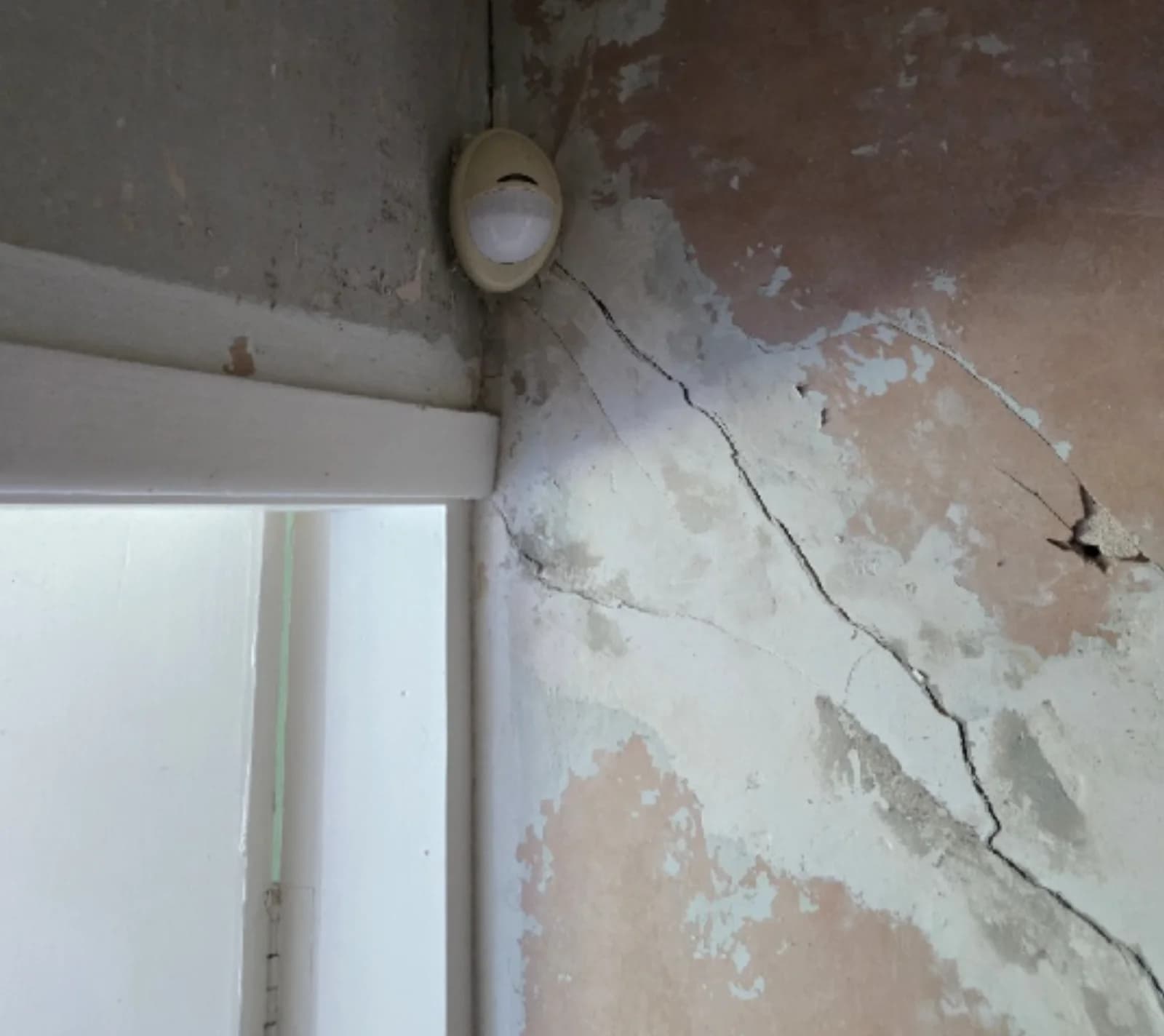
A 1970s Birmingham semi where the owner had watched cracks at the rear right‑hand corner creep for fifteen years. Shallow 550mm strip footings, defective drains softening the ground beneath them. Drains repaired first, then nine resin injection points in a day.
A two‑storey 1970s semi‑detached house in Birmingham, self‑funded by the owner, who had lived there for fifteen years and had watched the cracks at the rear right‑hand corner steadily grow over that time. On site we ran a 360‑degree scan, took photos, carried out a dynamic cone penetrometer test and a drainage survey. Soils were soft, gradually stiffening down to 2.6m, confirmed against the British Geological Survey data. The footing in that corner was a shallow strip foundation only 550mm deep. The drainage runs around the movement area had numerous slight cracks, displaced joints and areas of root ingress — enough to keep water feeding into the soil below the footing for years.
The drains had to be repaired before we could inject. Otherwise we'd be firming up a column of soil that was going to carry on getting soaked. We held the design, told the owner to get the drainage fixed first, and only mobilised when that was done. Standard buried‑utilities risk aside, nothing else on site.
Once the drains were repaired, we treated the rear right‑hand corner to 2.6m below ground level. Nine injection locations around the affected corner, treating at three depths — 0.9m, 1.6m and 2.6m — with polyurethane rigid foam resin to firm up the softened column under the shallow strip footing.
Completed in a single day. Injection points repaired, area reinstated (patio slabs re‑laid, no mess left on site), and critically the owner stayed in the property while we worked. Post‑works dynamic cone penetrometer testing confirmed the ground had been stabilised, clearing the way for cosmetic repair of the corner cracks after fifteen years of movement.
How resin injection worksTell us what you're seeing. We'll book a same‑week survey, produce a written engineering report, and quote in plain numbers.