A 1930s Oxford semi where the concrete slab under the front room had dropped after prolonged water ingress from a leaking drain. Stabilised with a shallow resin grid, drilled through the original parquet so every finger could be re‑laid later.
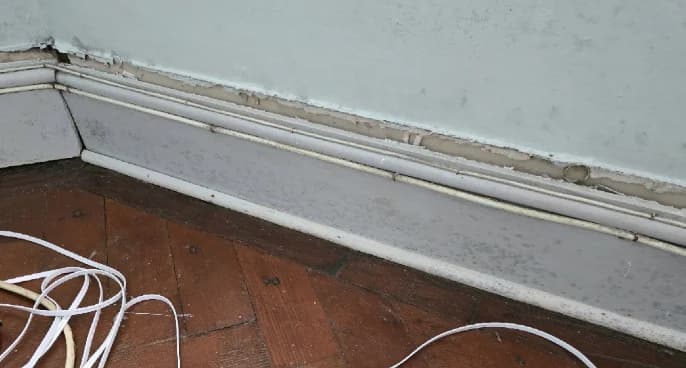
A 1930s Oxford semi where the concrete slab under the front room had dropped after prolonged water ingress from a leaking drain. Stabilised with a shallow resin grid, drilled through the original parquet so every finger could be re‑laid later.
A 1930s two‑storey semi in Oxford. The customer was worried about cracks at the joint between the rear extension and the main property, but the real movement was to the concrete floor slab in the front room, not the walls. Internal floor slabs aren't covered by building insurance, so the customer decided to self‑fund. They'd already run a drain survey and had the drain defects repaired before calling us — on our visit, the 360‑degree scan and basic level survey confirmed no movement to the main walls, only the slab, caused by shallow soils softening below the floor under prolonged water ingress from the drain.
The front room had original parquet flooring that the customer wanted to keep. Our team drilled carefully through the parquet fingers so each piece could be lifted, repaired or replaced later.
Following the 360‑degree scan, dynamic cone penetrometer test and utility check, we designed a single shallow injection level on a 1–1.5m grid across the affected area of the front room, treating to 0.5m below ground with polyurethane rigid foam resin.
Completed in a single day. No mess left on site, injection points repaired, and critically the customer didn't need to leave the property while we worked. Post‑works dynamic cone penetrometer testing confirmed the slab was stabilised, clearing the way for the floor repairs.
Resin injection vs underpinningTell us what you're seeing. We'll book a same‑week survey, produce a written engineering report, and quote in plain numbers.