A single‑storey 1990s rear extension on a 1930s Sheffield semi was rotating away from the main property, opening a crack at the joint. Stabilised with resin injection in one day, drainage defect flagged back to the owner, no decant.
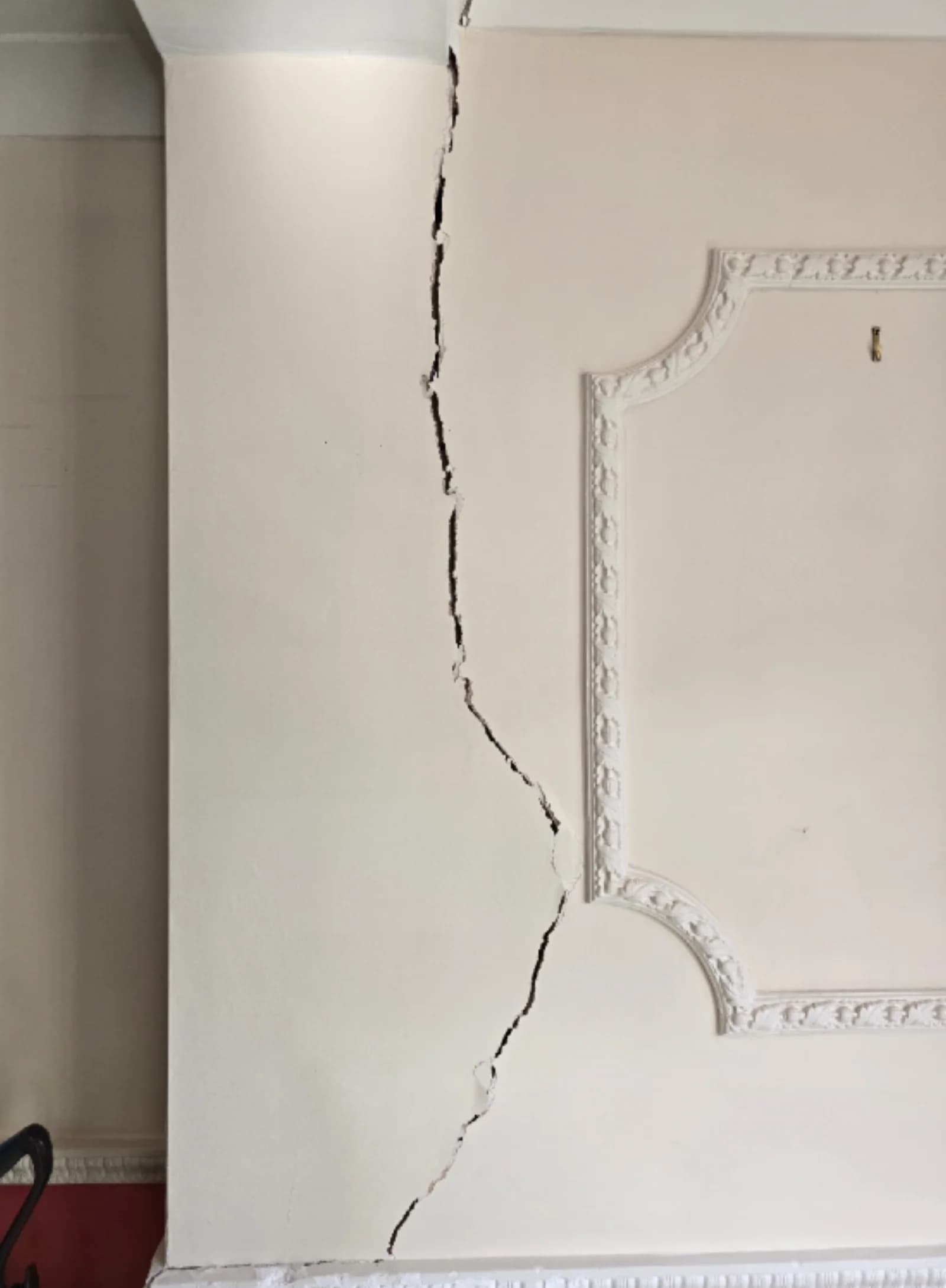
A single‑storey 1990s rear extension on a 1930s Sheffield semi was rotating away from the main property, opening a crack at the joint. Stabilised with resin injection in one day, drainage defect flagged back to the owner, no decant.
A two‑storey 1930s semi‑detached house in Sheffield with a single‑storey rear extension added in the 1990s. The owner, self‑funding, had become increasingly concerned by continual cracking at the connection between the rear wall of the main house and the extension — the extension appeared to be rotating away. On site we ran a 360‑degree scan, took photos, carried out a dynamic cone penetrometer test and a drainage survey. Soils were soft, gradually stiffening down to 2.5m — confirmed against the British Geological Survey data. The extension was founded on a 400mm raft, significantly shallower than the main property's footings, and the roof drainage was discharging straight to ground rather than into the drain run, softening the soils below.
No significant on‑site risks beyond the standard buried‑utilities check. The real finding was off our scope: the extension's roof downpipe was dumping water into the ground next to the movement area. We flagged it to the owner so the downpipe could be tied into the nearby drainage system, otherwise the softening would carry on.
Ground improvement to the front, left and rear walls of the extension, treating to 2.3m below ground level. Six injection locations around the structure, treating at three depths — 0.6m, 1.3m and 2.3m — with polyurethane rigid foam resin to firm up the softened column under the raft.
Completed in a single day. Injection points repaired, no mess left on site, and the owner stayed in the property throughout. Post‑works dynamic cone penetrometer testing confirmed the ground had been stabilised, clearing the way for cosmetic repair of the crack at the joint.
Cracks in walls — when to worryTell us what you're seeing. We'll book a same‑week survey, produce a written engineering report, and quote in plain numbers.