A single‑storey extension on a late‑1990s semi in Wigan had dropped and rotated away from the main building. Stabilised with resin injection in one day, with the family staying put and no mess left on site.
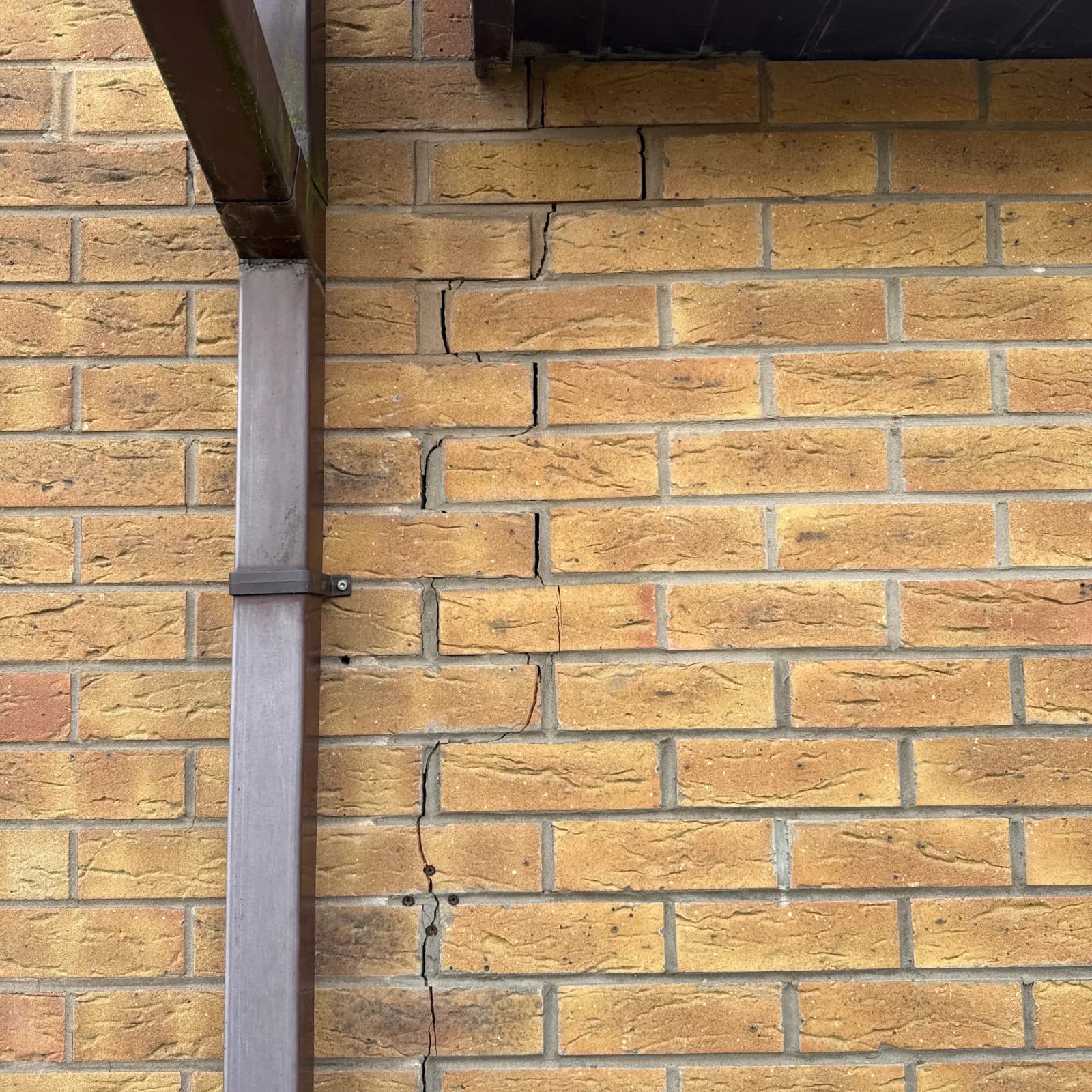
A single‑storey extension on a late‑1990s semi in Wigan had dropped and rotated away from the main building. Stabilised with resin injection in one day, with the family staying put and no mess left on site.
A late‑1990s two‑storey semi with two single‑storey extensions (a kitchen/utility to the left, a study to the right). The homeowner noticed cracks forming on the left‑hand wall of the kitchen extension and called us direct — self‑funded, no insurance claim. On site we ran a 360‑degree scan, a dynamic cone penetrometer test and a drainage survey. Footings were deep, but soft soils ran down to around 2.5–3m before the ground firmed up. Drains were in good condition and no trees were in play — the left wall had dropped and rotated away from the main building through differential settlement post‑construction.
Access was tight. The extension sat only 150mm from the neighbour's fence, so we had to work from the neighbour's driveway with fence panels removed and a plan agreed in advance with both households.
A ground‑improvement design targeting the external walls of the left‑hand extension. Ten injection locations around the structure, treating at two levels (1.6m and 2.6m below ground) with polyurethane rigid foam resin. Laser levels monitored the elevation throughout, and an engineer watched the drains for material ingress given how close the injection points sat to them.
Completed in a single day. No mess left on site, no ingress into the drainage, and critically the family didn't need to leave the property while we worked. Post‑works dynamic cone penetrometer testing confirmed the ground was stabilised, clearing the way for cosmetic repair.
How resin injection worksTell us what you're seeing. We'll book a same‑week survey, produce a written engineering report, and quote in plain numbers.