Could the Current UK Heatwave Lead to Subsidence This Year?
When there are very hot summers following wetter winters what normally follows is a surge in subsidence related claims and issues.
Subsidence issues don’t always occur in the hottest weeks, but the issues build over time, clays shrink, structures drop and cracks start to appear.
Ground movement often becomes noticeable several weeks or months after prolonged drought and therefore many homeowners won’t connect new wall cracks with weather that occurred earlier in the summer.
Previous surge years of 2018, 2022 and 2025 are looking to be dwarfed by what is happening in 2026, with this year ahead of those years in terms of ground drying out.
In short, it will take a significant amount of rainfall in July and August to prevent a significant surge and therefore a rise in subsidence issues this year.
What happens to the ground during prolonged heat?
During prolonged droughts, moisture evaporates from the soils, clay soils shrink, the ground sinks and foundations start to move and loose the support they need. As the ground moves in an uneven fashion, so does the foundation above it, causing cracks to appear.
This shrinkage and movement is much more prevalent in clays with high volume potential – these are more susceptible to shrink and swell. This includes clays such as London Clay, Oxford Clay, Gault Clay, and Weald Clay as examples.
Why is the South East seeing a surge in subsidence
Alongside the heat we have experienced this summer there has also been very little rainfall.
The normal rainfall average for July is 45mm of rainfall.
In the famous summer drought of 1976 where there were weeks of mandatory water rationing and standpipes the rainfall that year in July was 15mm.
In 2022, July was the previous driest July in a century with 7mm of rain and this sparked extensive fires and a record 40-degree heat wave.
In 2026 we have had less than 1mm of rain, intense heatwaves and therefore we are going to see a larger issue with subsidence.
Which Parts of England Are Most at Risk?
Areas that have clays with high volume potential are going to see more issues. This includes clays such as London Clay, Oxford Clay, Gault Clay, and Weald Clay as examples.
The areas most exposed to this year’s drying sit across London and the wider South East and East Anglia, including Essex, Kent, Surrey, Hertfordshire, Buckinghamshire, Bedfordshire, Cambridgeshire, Northamptonshire, Oxfordshire and parts of East Anglia. These regions sit on highly shrinkable clay formations, such as London Clay and its neighbouring Oxford, Gault and Weald Clay belts, that are particularly susceptible during prolonged drought, because they hold a high proportion of water within their structure and lose volume dramatically as they dry out.
Check our postcode checker to see if your area is at risk of subsidence.
Areas with lower subsidence risk
Areas that have sands, gravels and clays with lower volume potential will see less issues, which includes areas such as:
- Yorkshire
- Cumbria
- Northumberland
- Cornwall
- Devon
These regions often have rock or sand-based geology which behaves very differently to clay when it dries out. Sand and rock don’t shrink and swell with moisture loss in the way clay does, so ground movement is far less likely, even during extended dry spells.
It’s worth stressing that all homes, regardless of location, can experience cracking. However, not all cracking is subsidence. Most cracks are down to normal settlement, thermal movement or simple wear and tear, and homeowners outside the highest-risk clay areas shouldn’t assume the worst without a proper inspection.
Check your location using our Subsidence Risk Postcode Checker →
Does Every Crack Mean Subsidence?
Normal settlement vs subsidence
Not every crack is a sign of subsidence. New-build and recently extended homes often develop fine plaster cracks as materials dry out and settle over their first year or two. These are cosmetic and typically stabilise on their own. Many homes also show a degree of seasonal movement, where hairline cracks open slightly in summer and close again once cooler, wetter weather returns; this is normal expansion and contraction rather than structural movement. Thermal expansion – where building materials expand in the heat and contract in the cold – can also cause small, stable cracks, particularly around joints between different materials. The key difference with subsidence is that the movement is progressive and doesn’t reverse itself with the seasons.
Signs you shouldn’t ignore
While hairline and seasonal cracks are usually nothing to worry about, certain signs point to something more serious and are worth having assessed by a professional:
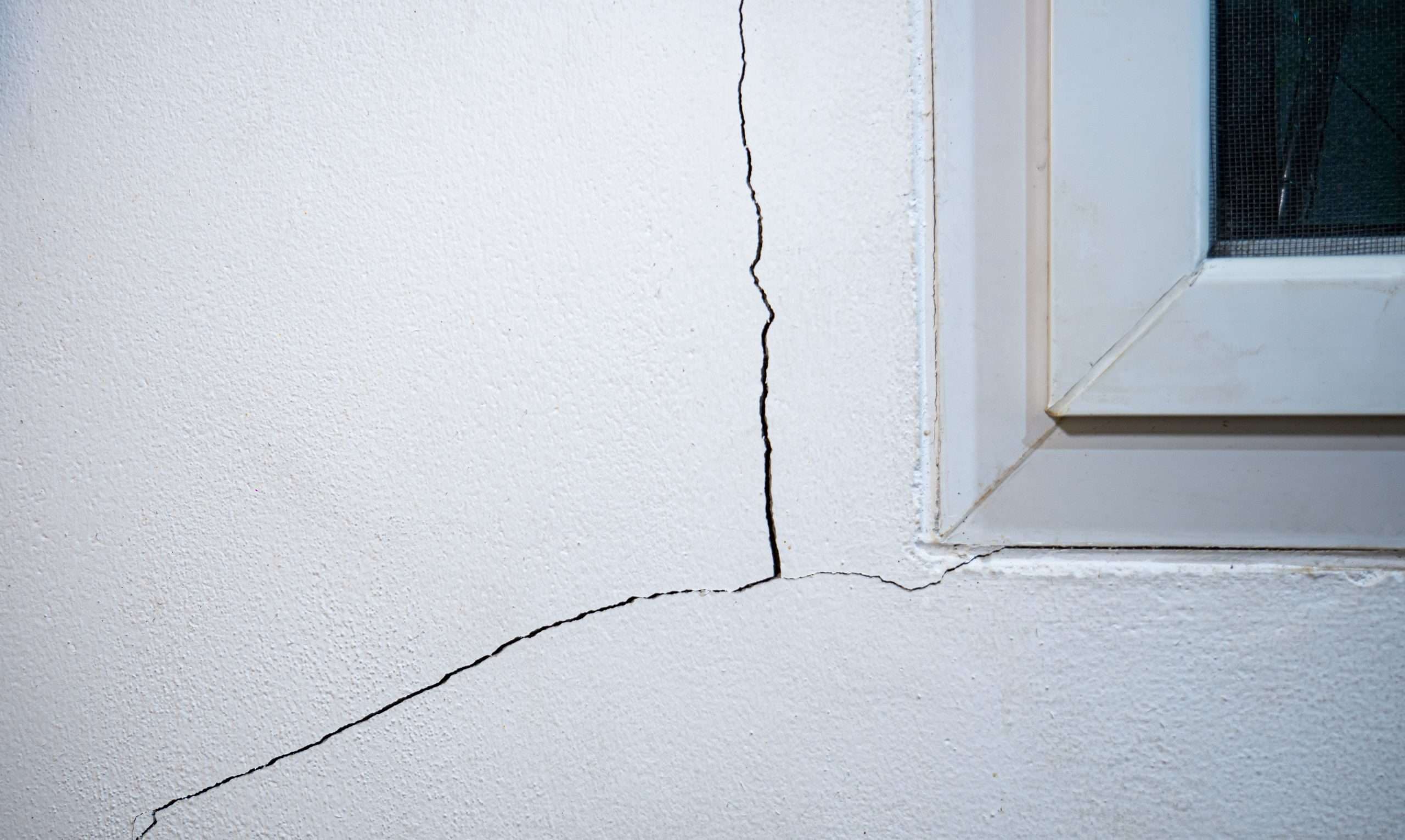
- Diagonal cracks, particularly around windows, doors or corners of the building
- Cracks wider than 3mm (roughly the thickness of a 10p coin)
- Doors and windows that have started sticking or no longer close properly
- Sloping or uneven floors
- Gaps appearing around window and door frames where they meet the wall
If you notice a combination of these signs, especially if cracks are growing over weeks or months, it’s worth getting an expert opinion sooner rather than later.
Read our blog on When to Worry About Cracks in Walls →
Trees Can Make the Problem Worse
How tree roots remove moisture
Large, thirsty trees can significantly worsen ground drying during a drought. Mature oak, willow, poplar and plane trees in particular have extensive, water-hungry root systems that can extract large volumes of moisture from clay soil, sometimes from many metres away from the trunk. Willow and poplar are especially known for their aggressive, far-reaching roots, which is why they’re often planted well away from buildings. Where these trees sit close to a property built on clay, the soil around and beneath the foundations can dry out and shrink faster than the surrounding ground, increasing the risk of uneven settlement and subsidence.
Should you remove the tree?
Not always, and removing a tree isn’t a decision to make lightly. While a large tree close to a property can be a contributing factor to subsidence, felling it isn’t automatically the right fix. Removing a mature tree can cause the clay soil that had been kept dry by its roots to gradually reabsorb moisture and swell back up, a phenomenon known as heave, which can cause its own structural damage – sometimes worse than the original subsidence. Because of this risk, tree removal or significant pruning near an affected property should only be carried out on the advice of a structural engineer or subsidence specialist, who can assess the tree, the soil and the foundation together before recommending a course of action.
Why 2026 Could See More Subsidence Claims
Hotter, drier summers are becoming more frequent in the UK, and with them, repeated cycles of drought that leave clay soils with less time to recover moisture between events. Insurers have already been tracking this trend closely: the 2022 heatwave alone generated around 23,000 subsidence claims, with insurers paying out an estimated £219 million – the highest annual subsidence bill in 16 years at the time. That record was then broken in 2025, when domestic subsidence payouts reached roughly £307 million following what the Met Office described as the UK’s hottest summer on record. With 2018, 2022 and 2025 all now considered “surge years” for subsidence, and 2026’s ground conditions tracking ahead of those years, industry commentators are already flagging the potential for another significant surge in claims. Longer-term climate projections also point the same way, with a continued shift towards hotter, drier summers expected to increase shrink-swell risk across large parts of southern England in the years ahead.
What Should Homeowners Do Now?
Monitor cracks
Take dated photographs.
Avoid panic
Many cracks are harmless.
Don’t ignore movement
Early investigation can prevent larger repairs.
Avoid DIY structural repairs
It can be tempting to simply fill a crack and repaint over it, but doing this before the cause has been identified can hide an underlying problem rather than solve it. Cosmetic filling doesn’t address ongoing ground movement, and by the time cracks reappear through the new filler, the damage – and the cost of repair – is often significantly worse. Always get the cause diagnosed before carrying out cosmetic work.
What If Subsidence Is Confirmed?
If subsidence is confirmed, the next steps typically follow a clear process. It usually starts with an investigation, where a specialist assesses the property, the soil type and nearby vegetation to establish the likely cause. This is often followed by a period of monitoring, using crack gauges or level surveys over several months to track whether movement is ongoing or has stabilised. Drain surveys are also common, since damaged or leaking drains can wash away supporting soil and are a frequent contributing factor to subsidence. Where trees are involved, root management, such as controlled pruning or, in some cases, removal under professional guidance, may be recommended to reduce moisture loss from the soil. For confirmed cases with significant movement, underpinning may be carried out to strengthen and extend the foundations, while resin injection underpinning offers a less disruptive alternative in many suitable cases, stabilising the ground beneath the foundation without the extensive excavation traditional underpinning requires.
Find out more about Resin Injection Underpinning as a permanent subsidence fix →
Commercial Properties Are Also at Risk
It isn’t just homes that are vulnerable – commercial buildings on clay soils face exactly the same risks during prolonged heat and drought. Warehouses, schools, offices and industrial units can all experience foundation movement, and the consequences can be more disruptive and costly than for a domestic property, given the potential impact on staff, pupils, stock or day-to-day operations. Early identification is just as important for commercial premises, and specialist assessment can help building owners and facilities managers plan any necessary work with minimal disruption to the business.
Find out more about our Commercial Subsidence Services →
Concerned About New Cracks Following the Heatwave?
If you’ve spotted new or worsening cracks since this summer’s heat, it’s far better to have them looked at now than to wait and see what winter brings. Ground conditions rarely improve on their own once significant drying has taken place, and leaving movement unchecked can allow a manageable issue to develop into a much larger, more expensive repair. Our team can assess your property, identify the cause and recommend the right next steps – so get in touch today for expert advice and peace of mind.
FAQs
Can hot weather really cause subsidence?
Yes. Prolonged hot, dry weather causes clay soils beneath a property to lose moisture and shrink. As the clay shrinks, it can no longer support the foundations evenly, causing the ground – and the building above it – to move and crack. This is one of the most common causes of subsidence in the UK, particularly in areas with clay-rich soil.
How long after a heatwave do subsidence cracks appear?
Cracks often don’t appear immediately. It can take several weeks or even months after a period of hot, dry weather for the effects to become visible, as ground movement continues to develop gradually beneath the surface. This is why many homeowners notice new cracks in autumn or winter without realising they’re linked to summer drought.
Which soil type is most likely to cause subsidence?
Clay soils with high shrink-swell potential are the most likely to cause subsidence, including London Clay, Oxford Clay, Gault Clay and Weald Clay. These soils absorb and lose large amounts of moisture, causing significant volume changes. Sandy, gravelly and rocky soils are far less prone to this kind of movement.
Can heavy rain after a drought make subsidence worse?
It can, in a different way. As dried-out clay reabsorbs moisture, it can swell back up – a process known as heave – which can cause its own structural stress, sometimes in the opposite direction to the original subsidence. Sudden, heavy rainfall following a long dry spell can also increase the risk of localised issues such as washed-out drains or soil erosion around foundations.
Should I fill a crack before getting it inspected?
No, it’s best not to. Filling or redecorating over a crack before the cause has been identified can mask an ongoing problem, making it harder to diagnose and monitor. It’s better to take dated photographs, keep an eye on how the crack develops, and get a professional assessment before carrying out any cosmetic repairs.
Is every diagonal crack caused by subsidence?
Not necessarily. Diagonal cracks can also result from normal settlement, thermal movement or minor building wear, especially if they’re fine and stable. However, diagonal cracks are more commonly associated with subsidence than vertical or horizontal ones, particularly if they’re wider than 3mm or growing over time, so they’re worth having checked by a specialist.
Will my home insurance cover subsidence?
Most standard UK buildings insurance policies do cover subsidence, but claims can be subject to a higher excess than other types of damage, and insurers will usually want evidence of monitoring and an established cause before agreeing repairs. It’s worth checking your specific policy documents or speaking to your insurer, and always report suspected subsidence promptly, as delays can sometimes complicate a claim.