Is Subsidence Dangerous? Common Safety Risks and When to Get a Professional Survey
If you notice cracks in your walls, doors that are hard to close, or floors that are no longer level, it’s natural to wonder whether your home is unsafe. Subsidence can sound alarming, but not every sign of movement means a property is in immediate danger. What’s important is understanding what’s causing the movement, whether […]
Originally 5 Oct 2026·Last reviewed 8 Oct 2026·6 min read
If you notice cracks in your walls, doors that are hard to close, or floors that are no longer level, it’s natural to wonder whether your home is unsafe. Subsidence can sound alarming, but not every sign of movement means a property is in immediate danger.
What’s important is understanding what’s causing the movement, whether it’s continuing and how it’s affecting the overall structure. Some minor cracking can remain stable for years, while ongoing foundation movement can gradually create significant problems if it’s left unchecked.
Knowing which signs need attention and when a professional survey is best can help you understand what’s happening before deciding whether repairs are necessary.
Is Subsidence Dangerous? The Short Answer
Subsidence can become a serious structural problem, but it doesn’t automatically mean your house is unsafe to live in. Subsidence occurs when the ground under a building moves or loses some of its ability to support the foundations. This can happen for several reasons, including shrinkable clay soils, tree roots, and leaking drains.
The important point is whether the movement is active. A small, stable crack is very different from a crack that’s gradually widening. If you ignore active subsidence, continued ground movement can increase stress on different parts of the building and, over time, make repairs more complicated.
This is why, at Subsidence Ltd, we recommend assessing the cause rather than assuming a crack is harmless or that the whole property is now unsafe. Recognising the signs of subsidence early gives you a much better understanding of what needs to happen next.
The Main Safety Risks to Watch For
The visible signs of subsidence can tell you more than you think. Looking at the pattern of movement and whether several symptoms are occurring together can be beneficial:
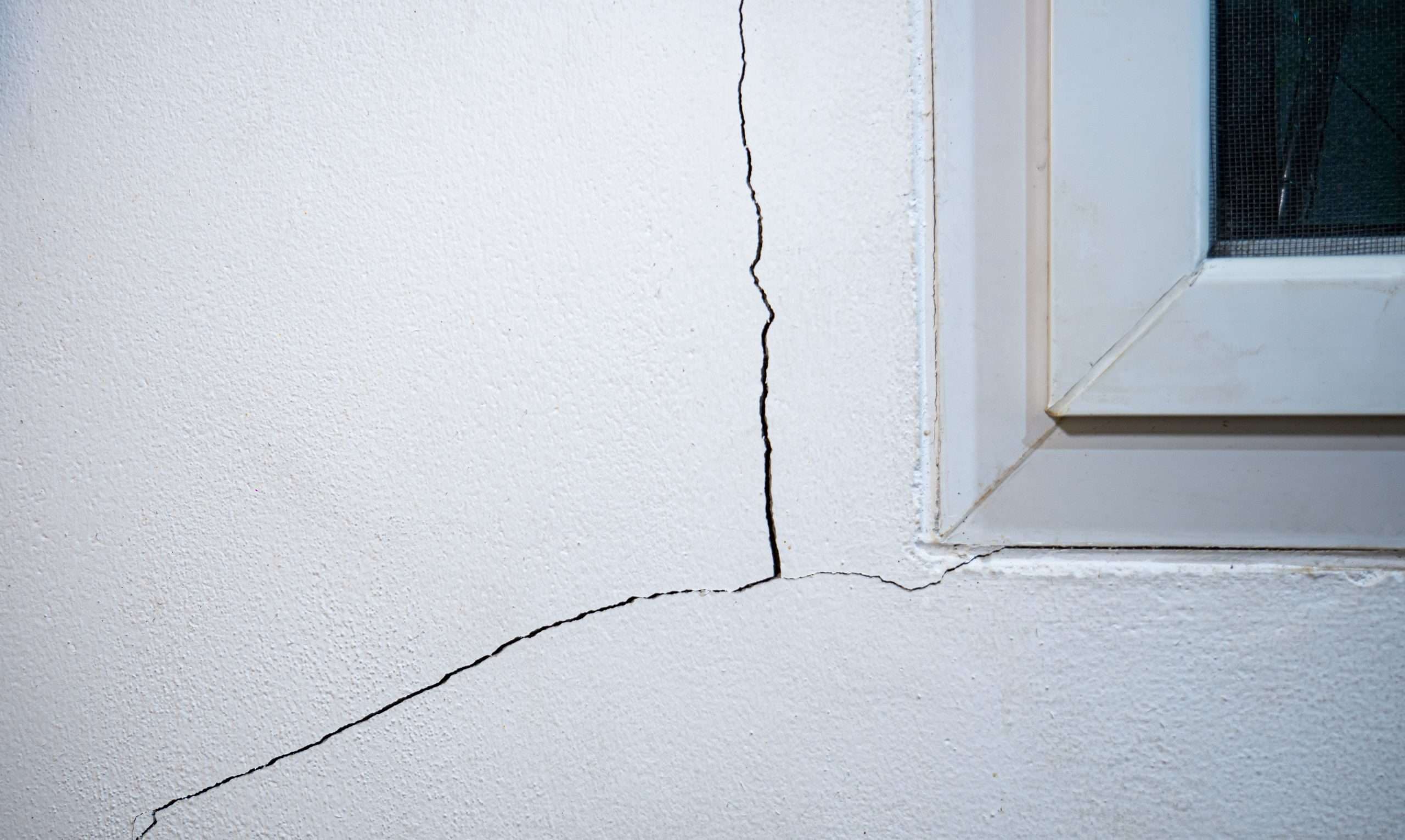
Cracking in walls – Cracks caused by structural movement can be diagonal or stepped, become wider over time, or appear around vulnerable points, such as extensions. Their location, direction and progression can also be just as important as their width.
Jammed doors and windows – If doors or windows become difficult to open or close, movement in the surrounding structure might have distorted the frame. This doesn’t automatically mean subsidence, but it’s worth investigating.
Sloping or uneven floors – A noticeably uneven floor can indicate that one part of a property has moved more than another. This is particularly important to assess when it develops alongside cracks in walls or changes around doors and windows.
Cracked drains – Ground movement can affect underground drainage, potentially cracking or displacing pipes. Leaking water can then soften or wash away surrounding soil, potentially worsening foundation movement. This means drainage should be considered both as a possible consequence and a contributing factor.
Strained gas or water pipes – Significant ground movement can affect buried services as the surrounding ground changes position. These issues shouldn’t automatically be attributed to subsidence, but they show why you need to assess wider ground movement rather than judge the problem from a single visible crack.
Generally, knowing when to worry about cracks in walls and which characteristics can make a crack more concerning is the first step to identifying dangerous subsidence.
Urgent or Worth Monitoring? How to Tell the Difference
One of the most useful things to establish is whether the ground is still moving. A crack’s appearance offers useful information, but the progression can tell you much more.
For instance, very fine cracks can result from plaster movement, minor settlement or seasonal changes and don’t always indicate a foundation problem. Wider cracks deserve closer attention, particularly when they appear alongside other symptoms. However, no single crack width can diagnose subsidence. A narrow crack that’s actively widening can be more concerning than a wider crack that’s remained unchanged for many years.
The rate of change is important too. If a crack is getting longer or wider, new cracks are appearing nearby, or doors and windows are becoming increasingly difficult to open, it can indicate ongoing movement. For this reason, we consider the complete pattern. If you notice several changes happening at the same time, it’s sensible to have them assessed rather than repeatedly filling and repainting cracks. Leaving active subsidence untreated can allow movement to continue, potentially making the repair more complex.
When to Get a Professional Survey (and What It Involves)
A professional survey is particularly useful when you can’t tell whether movement is ongoing or when several signs appear together.
The first stage is understanding the property and the movement pattern. This means looking at the location and direction of cracks, changes around doors and windows, uneven floors, and external brickwork, as well as factors such as trees, drainage and the underlying ground conditions. Ongoing measurements can then help establish whether movement is taking place. This is important because visual inspection alone can’t always tell us whether a crack is stable.
For homeowners who have noticed cracking but are unsure whether it’s moving, monitoring can provide useful evidence over time. Our Subcheck service establishes a sub-millimetre baseline and monitors changes so movement can be identified rather than simply assumed.
Ultimately, an assessment aims to identify the likely cause and determine whether the foundations require treatment. In some cases, monitoring might be appropriate; in others, the evidence points to immediate repair.
Fixing It Safely: Your Repair Options
The right repair often depends on the cause and extent of the ground movement. When subsidence is linked to localised weakness, resin injection can strengthen the supporting ground without the excavation needed for traditional underpinning. The resin is injected into targeted areas, where it expands and forms a load-bearing material.
Underpinning takes a different approach, usually involving excavation to strengthen or extend the existing foundations. It can still be useful in certain situations, so you need to establish the cause of the movement. This is why you should consider the differences between resin injection and traditional underpinning alongside the findings of a professional assessment.
The key isn’t to assume every crack requires major structural work, but also not to ignore signs of active movement because they seem minor. Understanding what’s happening under the property gives you the information you need to choose an appropriate repair.
If you’ve noticed cracking or other signs of movement and aren’t sure what they mean, contact our team for professional advice and a free survey.