Will El Niño Make Subsidence More Common? What the 2026–27 Forecast Means for UK Homes
An unusually powerful El Niño is building in the Pacific Ocean. In August, the Met Office warned it could be the largest in more than a century, and that 2027 is now very likely to become the hottest year ever recorded worldwide. El Niño doesn’t hand the UK a fixed weather script. But it’s arriving […]
Originally 2 Nov 2026·Last reviewed 2 Nov 2026·8 min read
An unusually powerful El Niño is building in the Pacific Ocean. In August, the Met Office warned it could be the largest in more than a century, and that 2027 is now very likely to become the hottest year ever recorded worldwide.
El Niño doesn’t hand the UK a fixed weather script. But it’s arriving at a moment when the ground beneath millions of British homes is already under strain after back-to-back record summers. For anyone living on clay soil, that combination points in one direction: more ground movement, more cracking, and more subsidence.
Here’s what the forecast actually says, why it matters for your foundations, and what you can do now.
What is El Niño, and why are forecasters so concerned?
El Niño is a natural climate pattern that happens every few years, when sea temperatures across the central and eastern tropical Pacific rise above normal. That extra ocean heat reshapes weather patterns around the globe, usually for around a year.
This one is different in scale. Forecasters expect Pacific sea temperatures to climb more than 3°C above normal, and the Met Office’s head of long-range forecasting has described the signal as unprecedented. The World Meteorological Organization puts the chance of El Niño lasting through to February 2027 at close to 100%, with the event expected to peak around December.
Because El Niño releases so much heat into the atmosphere, and because it’s sitting on top of long-term climate warming, 2027 is widely expected to overtake 2024 as the warmest year on record globally.
What could El Niño mean for UK weather?
The UK is a long way from the Pacific, so El Niño’s effect here is less direct than in places like India or Australia. Other weather systems can strengthen, weaken or override it. That said, forecasters have pointed to two things worth paying attention to:
A wetter, stormier autumn and early winter. The Met Office has flagged increased rainfall and storminess, particularly around November. Previous strong El Niño years have coincided with very wet UK winters. Winter 2015–16 brought major flooding, for example.
A hotter world in 2027. A record-warm global year doesn’t guarantee a scorching British summer, and scientists have been careful to say so. But El Niño’s extra warming, added to the UK’s already warmer climate, could set up the conditions for another hot, dry summer.
Neither outcome is good news for the ground under your home, and together they are a particular concern.
The ground is already primed for subsidence
To understand why El Niño matters, it helps to look at where we’re starting from.
Summer 2026 was the hottest on record, following the warmest spring ever recorded in England and Wales and five separate heatwaves.
Subsidence claims hit record levels. Hastings Direct reported its highest-ever month for subsidence claims in August 2026, almost 140% higher than the same month a year earlier. The UK’s biggest home insurers have said they are reviewing reserves and pricing as a result.
Repairs are getting more expensive. ABI figures show the average settled subsidence claim reached a record £20,000 in the second quarter of 2026, and total payouts hit a record £307 million in 2025.
Soils never fully recovered. Ground conditions at the start of 2026 hadn’t bounced back from the dry summer of 2025, so this year’s drought began on already-depleted ground.
In other words, much of the UK’s clay is entering this El Niño winter in a dried-out, shrunken state.
Three ways the El Niño years could drive more subsidence
1. Wet then dry: the worst combination for clay soils
Clay acts a little like a sponge. When it’s wet it swells, and when it dries out it shrinks and cracks. This “shrink-swell” cycle is the single biggest cause of subsidence in the UK.
What makes the cycle so damaging is the size of the swing. A very wet winter followed by a very hot, dry summer pushes clay from one extreme to the other, and the foundations sitting on it move with it. That’s exactly the pattern we saw in previous subsidence “surge years” such as 2003, 2018 and 2022. If El Niño brings a stormy winter and 2027 delivers another hot summer, the conditions for a further surge are in place.
2. Uneven recovery and ground heave
When heavy rain returns to badly dried-out clay, the ground doesn’t rehydrate evenly. Some areas swell faster than others, which can push parts of a building upwards while others stay put. This is known as heave, and it can open up new cracks or widen existing ones over the winter months, even before the next dry spell. Read more about the difference between subsidence, settlement and heave.
3. Storms, leaking drains and washed-out soil
Not all subsidence is caused by drying clay. On sandier or more granular soils, water is the problem. Prolonged heavy rain puts old and cracked drains under pressure, and water escaping from a damaged pipe can gradually wash away the soil supporting a foundation. A stormy El Niño winter is a real test for ageing drainage. Here’s how cracked drain pipes lead to cracks in walls.
Is your home at risk?
Subsidence can happen anywhere, but some homes are far more exposed than others. Your risk is higher if:
You live on shrinkable clay. The British Geological Survey identifies London, Essex, Kent and the band running from Oxford to the Wash as the most exposed areas, but clay soils are found across much of England.
Your home has shallow foundations. Many older properties, along with bay windows, porches, conservatories and extensions, sit on shallower footings than the main house.
You’ve had movement before. If the original cause was never fully dealt with, subsidence can return.
Warning signs to look out for this winter and next summer
Subsidence damage often shows up months after the weather that caused it, so keep an eye out over the coming year for:
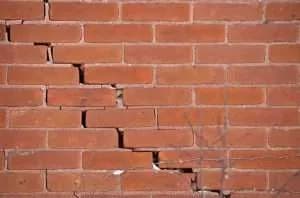
New diagonal cracks, especially around doors and windows, and particularly any wider than about 3mm (roughly the thickness of a £1 coin)
Cracks that are wider at the top than the bottom, or vice versa
Cracks where an extension, porch or bay window meets the main house (here’s why that happens)
Doors and windows that start sticking for no obvious reason
Wallpaper rippling or tearing at joins that aren’t caused by damp
Gaps opening up between skirting boards and floors
Cracks that reappear soon after you’ve filled and redecorated
Not every crack is subsidence. Many are harmless shrinkage cracks in plaster. Our guide to cracks in walls explains when to worry and when not to.
What you can do now
You can’t control the weather, but you can reduce the chances of a small problem becoming a big one.
Check your drains and gutters before the winter storms. Clear blocked gutters and downpipes, and if you have any doubts about your underground drains, a CCTV drain survey can spot cracks and leaks early.
Monitor any existing cracks. Mark the ends with a pencil, write the date beside them and take a photo with a ruler for scale. If a crack grows over a few weeks, that’s important evidence.
Think carefully about trees. Keep large trees well managed, but don’t fell a mature tree near the house on clay soil without advice, as sudden removal can cause heave. Here’s how to reduce the risk.
Review your home insurance. Make sure you understand your subsidence cover and excess, and that your sum insured reflects current rebuilding costs.
Get movement checked early. After the 2026 surge, insurers and contractors are already busy. If another surge follows in 2027, waiting lists will grow. Acting early is almost always cheaper and less disruptive than waiting.
How Subsidence Ltd can help
If you’re seeing signs of movement, or you’re simply worried about what the next 12 months could bring, our engineers can help. We offer a free, no-obligation survey, typically within seven days, to find the root cause of the problem.
Where stabilisation is needed, our polyurethane resin injection method re-supports the ground beneath your foundations without excavation. Most domestic jobs take just one to two days on site, you don’t need to move out, and every project comes with a fixed price and a written 10-year warranty. See how resin injection compares with traditional underpinning.