Why Do Cracks Always Appear Where an Extension or Bay Window Meets the House?
Spotting a crack where an extension, porch or bay window meets the original part of your home can be worrying. Unlike a small, cosmetic crack on a wall, cracks at these joining points are more noticeable, and many homeowners immediately wonder whether this means they have subsidence or if it’s a normal sign of an […]
Originally 8 Sept 2026·Last reviewed 8 Oct 2026·7 min read
Spotting a crack where an extension, porch or bay window meets the original part of your home can be worrying. Unlike a small, cosmetic crack on a wall, cracks at these joining points are more noticeable, and many homeowners immediately wonder whether this means they have subsidence or if it’s a normal sign of an older building adjusting over time.
Cracks commonly appear in these locations because different parts of a house can be affected differently by changes beneath the foundations. When an older property and a newer extension move at different rates, stress can build up where they meet. Understanding why this happens, what the crack pattern can tell you, and when it needs professional attention can help you choose the right solution before the issue becomes harder to resolve.
Why These Areas Crack First
The connection between an older property and a newer structure is one of the most vulnerable areas. This is because the two sections of the house were usually built at different times, often with different materials, foundations, and ground support.
The original house may have settled over many decades, creating a stable foundation. Whereas an extension or bay window may have been added later with a different foundation design and loading requirements. When the ground beneath one section of the property moves more than another, stress develops at the connection point. The brickwork can’t absorb this movement, so a crack often forms along the join where the old and new structures meet.
This type of movement is known as differential movement. It doesn’t automatically mean your home has serious structural damage, but it requires closer inspection.
Old House, New Extension. Why the Foundations Don’t Move Together
Many homeowners assume that because an extension is attached to the main house, both parts will behave as one structure. In reality, the foundations can respond differently to changes in the ground. Older homes often have shallow foundations, and later extensions can have different depths and construction methods, or be supported by a smaller area of ground.
This is particularly important in many parts of London and the South East, where shrinkable clay soils are common. During prolonged dry weather, clay can lose moisture and shrink. If one part of the property is supported by soil that moves more than another, the foundations can settle unevenly. This doesn’t mean the extension was poorly built; it’s often the result of two separate structures responding differently to changes beneath them.
What the Crack Actually Looks Like
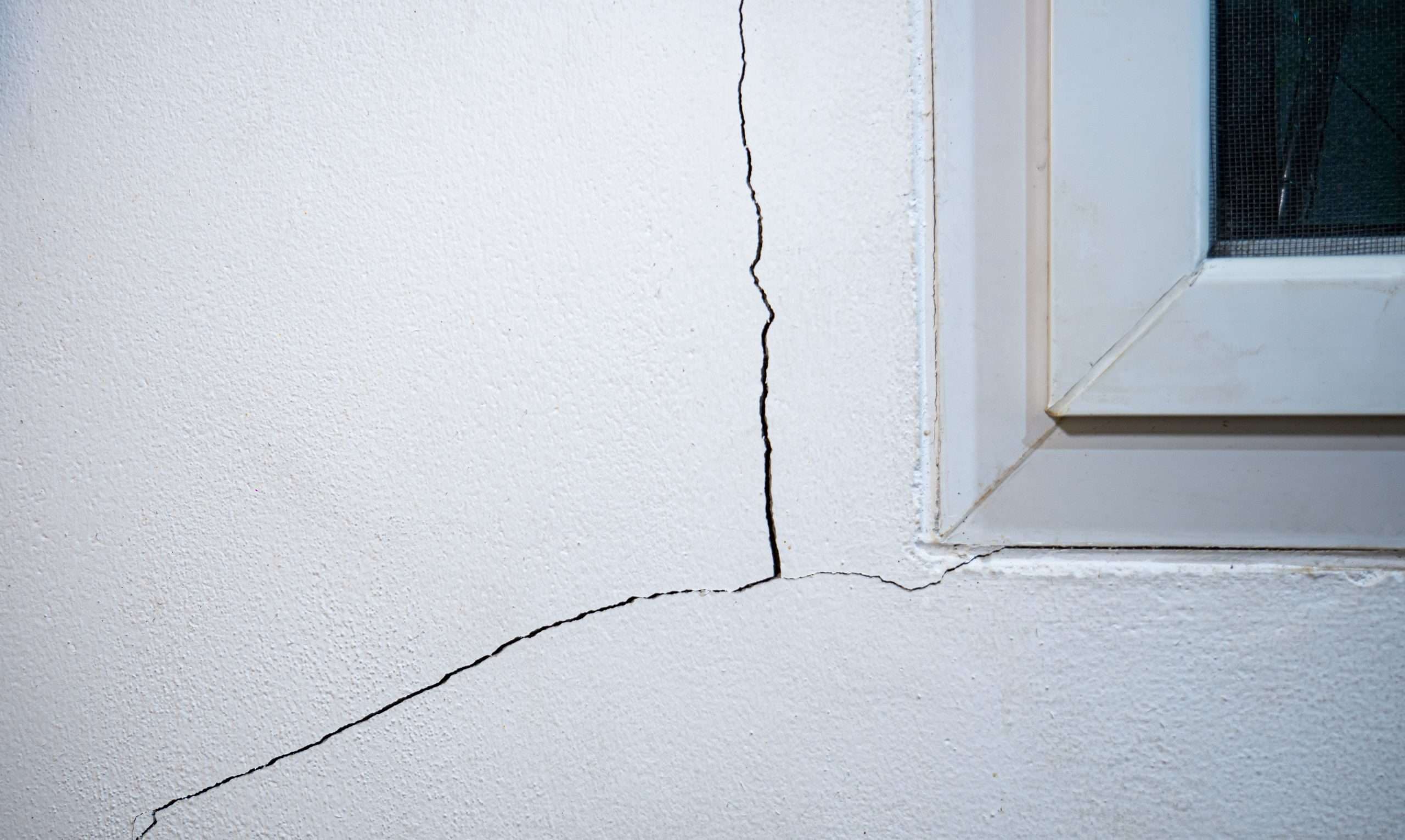
Cracks caused by movement between an extension or bay window and the main house often have an instantly recognisable appearance.
Typically, the crack will appear vertically along the join where the newer structure meets the original brickwork. In some cases, it develops into a stepped pattern that follows the mortar joints between bricks. Another common sign is that the crack widens toward the top, suggesting the two sections of the building are moving differently.
This pattern is different from cracks that spread randomly across a single wall. However, the appearance of a crack alone isn’t enough to diagnose subsidence. A proper assessment considers the size, direction, history and surrounding factors before recommending any repairs.
Is This Subsidence, or Just Normal Differential Movement?
Not every crack where an extension meets a house is caused by subsidence. Knowing how to check whether a crack is cause for concern is useful, particularly if it is growing, widening, or appearing alongside other signs such as sticking doors and windows.
Buildings naturally move over time as materials expand, contract, and adjust to changing temperatures and moisture levels. The challenge is identifying the difference between harmless settlement and something that needs further investigation.
Settlement usually occurs as a building adjusts after construction and often stabilises on its own. Subsidence occurs when the ground beneath part of the property can’t adequately support the foundations, causing downward movement. For homeowners, understanding the difference between settlement, subsidence and ground heave can help decide how to handle cracks.
If required, a professional inspection can determine whether the movement is ongoing and whether the foundations need additional support.
What Usually Causes It
Cracks can appear where an extension or bay window meets the main house for several reasons. In many cases, the underlying issue relates to changes in the condition of the ground beneath the foundations.
One common factor is soil shrinkage. During periods of prolonged dry weather, moisture is removed from the soil, causing clay to shrink and contract. This can reduce the support beneath shallow foundations. Trees can also contribute to ground movement. Large trees close to a property can have established roots that extend beneath foundations, drawing moisture from the soil and affecting its stability.
Other causes can include drainage issues. A damaged pipe can gradually wash away or soften the soil supporting the foundations. This is why you should always consider a leaking drain softening the ground when investigating unexplained cracks.
Case Study: How We Fixed An Edwardian Bay Window in Wandsworth
A recent example of this type of problem was an Edwardian bay window we treated in Wandsworth. The homeowner noticed cracking above the bay window and was concerned the issue could require extensive structural work.
Our investigation identified a localised problem linked to an area of soft clays where the drains had been previously leaking beneath the bay window foundation. Rather than carrying out traditional underpinning, we used resin injection to improve the support beneath the affected area. The work involved eight carefully positioned injection points and was completed in an afternoon with minimal disruption.
Importantly, the homeowner had previously been given an underpinning alternative quoted at £28,500. This highlights why understanding the cause of movement is so important. Not every cracking bay window requires major excavation or invasive repairs.
Why Resin Injection Suits This Problem Particularly Well
When movement is caused by weak ground beneath an extension or bay window, homeowners often start comparing resin injection and traditional underpinning. Resin injection offers a targeted way to improve foundation support without the disruption of traditional repairs.
The process involves inserting small tubes beneath the affected area, then injecting structural resin into the ground. As the resin expands, it fills weak points and improves the soil’s load-bearing capacity, helping to stabilise the foundations with minimal disturbance to the property. This approach can be particularly effective for localised movement, where a smaller section of the building is affected. Unlike traditional underpinning, which involves excavation and foundation alterations, resin injection strengthens the ground already supporting the structure.
If a crack appears where an extension or bay window meets your home, it’s worth having it professionally assessed rather than assuming it’s just a cosmetic issue. Early investigation can help determine whether the movement is ongoing and whether an underlying problem is affecting the foundations.
We recommend looking for common signs around the property, including whether cracks are increasing in size, whether doors and windows have started sticking, or whether there are signs of ground movement outside the home. These details can help build a clearer picture of what might be happening beneath the property. Understanding the potential repair options and costs can also help homeowners make informed decisions.
For homeowners looking for specialist support, our team provides subsidence repairs in London, and you can use our subsidence risk postcode checker to understand whether your area may be more vulnerable to ground-related issues.
Contact Subsidence Ltd
At Subsidence Ltd, we specialise in diagnosing and repairing ground-related movement with targeted resin injections. If you’re concerned about cracks around an extension or bay window, contact our team for expert advice and a professional assessment.